

United introduces ‘Basic Business Class’, and how ‘Basic Economy’ wrecked US budget airlines
United Airlines is the latest carrier to introduce ‘Business Class Light’ tickets – a trend which has, for better or worse, passed British Airways and Virgin Atlantic by for now.
This was announced a couple of weeks ago but the details were vague. We now know the details and it isn’t great.
For a start, you will earn ZERO MileagePlus miles on a ‘Base’ business class ticket if you do not have a United Airlines credit card and/or do not have elite status in MileagePlus.
This is pretty radical. You could spend $5,000 on a flight ticket on a legacy carrier and not receive a single mile for your trouble.
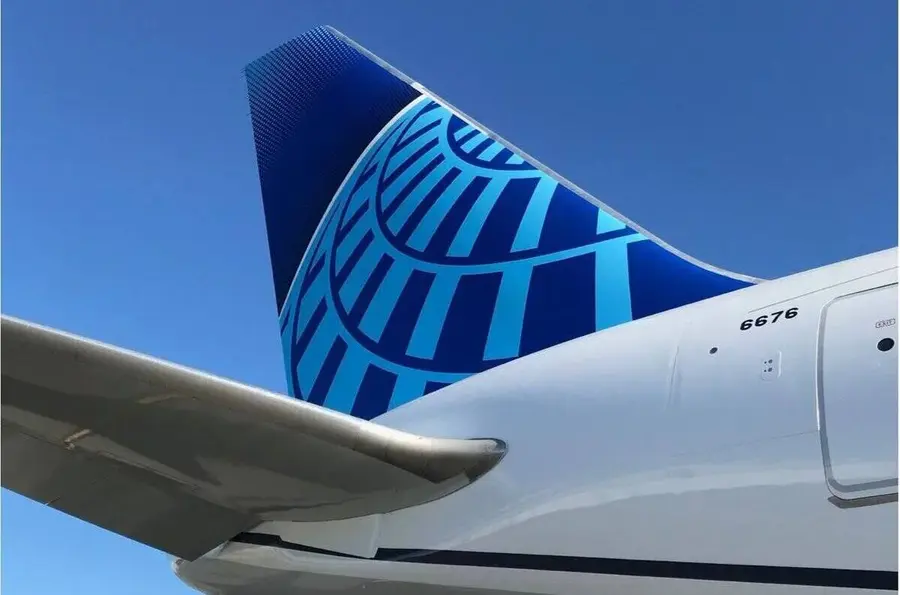
This is what you DON’T get on a long haul business class flight booked as ‘Base’:
- Free seat selection (paid seating costs up to $150 each way)
- A second checked suitcase (you get one bag free)
- Access to premium Polaris lounges (you can use the sparser United Club lounges)
- Changes / cancellations
- The ability to upgrade to Polaris Studio, the ‘business plus’ seats at the front cabin
- MileagePlus miles, if you don’t have status or a United credit card
You DO earn credit towards elite status, which with United is based on your annual spending.
The price difference (I won’t say ‘saving’, because prices have not come down) between ‘Base Business’ and ‘Standard Business’ appears to be exactly $400 return.
To be fair to United, the ‘Base’ package above is not unflyable. You may not care about advance seat selection, especially if travelling alone. I can’t remember the last time I checked in two suitcases per person. I could survive in a United Club lounge, and only some airports have a Polaris lounge anyway.
The key issue may be lack of refundability. Unlike UK carriers, the US airlines generally allow their cheapest tickets to be refunded for a travel credit towards a future flight. You lose this right with Base business class. It may be worth paying $400 extra as insurance against needing to cancel.
How Basic Economy caused a crisis for US low cost carriers
The launch of ‘Base’ business class fares is a good excuse to discuss something we’ve not covered on HfP before – how the majority of low cost US airlines are now in financial crisis.
You may not have realised how bad things are. Spirit, already under bankruptcy protection, is rumoured to be on the verge of liquidation, with a shutdown possible within days.
JetBlue (not a budget carrier but not truly full service) is looking like it will go into bankruptcy protection soon. Its debt is so high – and growing – that United is believed to have walked away from acquiring it.
Whilst airlines such as easyJet, Ryanair and Wizz Air have totally changed flying in Europe (Ryanair is now the largest airline here, carrying over 200 million passengers annually), the US market is still dominated by full service airlines such as American, Delta and United.
Low cost airlines such as Frontier and Spirit exist but have struggled for the past five years. A potential merger between Spirit and JetBlue was blocked by regulators and Spirit has undergone bankruptcy protection twice in the past two years.
Meanwhile, a JP Morgan analyst recently declared that “Frontier’s deeply negative margins are second only to Spirit’s, and remain among the worst peacetime margins we’ve ever witnessed.”
According to Cirium, the top five US full service airlines (AA, Alaska, Delta, JetBlue, United) will offer more than twice the number of flights and seats this month than the top five US low cost carriers (Allegiant, Frontier, Spirit, Southwest, Sun Country):
| Airline grouping | Flights in April | Seats in April |
|---|---|---|
| Top 5 US full service airlines | 345,621 | 59,486,923 |
| Top 5 US low cost carriers | 165,233 | 28,095,291 |
Together with China, Japan and Germany, the United States has one of the lowest penetrations of low cost carriers in the world. Just 34% of capacity is operated by LCCs vs 67% from full service airlines, according to OAG.
In an interview with the Wall Street Journal, United’s CEO even went as far as saying that the low cost carrier model was “dead” and “crappy.”
“The model was: screw the customer. Trick people, get them to buy, get them to come, and then charge them a whole bunch of fees that they aren’t expecting. Disclosures buried in legalese. Their problem is that they got big enough that they needed repeat customers. They don’t get them.”
However, I would argue that there’s another factor at play. Full service airlines like United adopted the low cost carrier playbook and weaponised it against them.
The reality is that American Airlines, Delta and United have been able to adapt far more successfully against the threat of low cost carciers than airlines in other regions.

How the low cost carrier model works
Before I unpack that, let’s take a quick look at how the low cost carrier model works. The success of airlines such as Ryanair is down to several concepts:
- Fleet simplicity: Ryanair operates a single fleet of around 340 Boeing 737s, ranging from older models to the newer MAX. A single fleet means that pilots and crew can operate any aircraft and you only need spare parts for one aircraft type. Compare that to other airlines who operate numerous aircraft types and must maintain multiple pools of spare parts and where crew must be trained on multiple types.
- High utilisation: Ryanair maximises the use of its aircraft at all times. An aircraft that is not flying is not making money, so Ryanair has perfected the art of quick, 25-minute turn-arounds. Meanwhile, its aircraft spend an average of at least nine hours per day in the air.
- Unbundling: the price you see on flight comparison sites shows the flight-only price and doesn’t include basic benefits such as luggage allowance, allowing low cost airlines to show a low initial upfront cost
Taken together, and with other cost saving measures such as opportunistic aircraft orders at rock-bottom prices and substantial fuel hedging, Ryanair has the lowest unit costs in Europe.
This keeps the airline flying but doesn’t make it money. Profits are generated by up-selling customers to buy ancillary add-ons such as extra luggage, speedy boarding and other creature comforts that it has stripped out of the fare.
When the low cost carrier model fails
The model is great when you can undercut your rivals, but what happens when operating costs go up and you can no longer offer bargain-basement pricing?
You only have one option: to increase your prices, thus taking the risk that you price out your (cost-sensitive) base.
Customers end up paying more for the same – or worse – service. Meanwhile, higher-margin airlines such as United can absorb cost increases.
But there’s another way that low cost airlines struggle: they have limited opportunities to upsell.
Simplicity drives them to offer single-class cabins, but this means they can’t sell you upgrades. Meanwhile, an airline such as United can offer classic economy (with luggage and seat selection bundled in) plus extra legroom economy and even upgrades to business class and beyond.
This is the crucial limiting factor for low cost airlines. It is what has driven Southwest Airlines to introduce more premium seating and experiences, giving it the ability to offer a more comfortable – and profitable – experience.

How United has adapted the low cost model
United Airline started on its unbundling journey by selling Basic Economy fares in 2017 at the peak of the low cost carrier surge in the United States. It allowed the airline to compete on cost, showing near the top on flight booking searches rather than being buried.
Attracting those customers is crucial, because although people search based on price, they are often willing to pay for comfort at a later date. Fundamentally, the trick works.
By offering Basic Economy fares it can get customers on board. Once they’re locked in, it can offer comfort upgrades and bolster its profit margins.
This has been successful enough that United, as I explained above, is now rolling it out to long haul premium economy and business class tickets.
In total, it means United now has at least eleven different types of ticket:
- Basic Economy
- Standard economy
- Flexible economy
- Economy Plus (sold as an upgrade to standard and flexible economy)
- Base Premium Plus
- Standard Premium Plus
- Flexible Premium Plus
- Base Polaris business class
- Standard Polaris business class
- Flexible Polaris business class
- Polaris Studio (sold as an upgrade to standard and flexible business class)
The result is an airline that sells tickets like a low cost airline but with a much more substantial premium experience. It has adopted the ancillary model for a full service carrier.
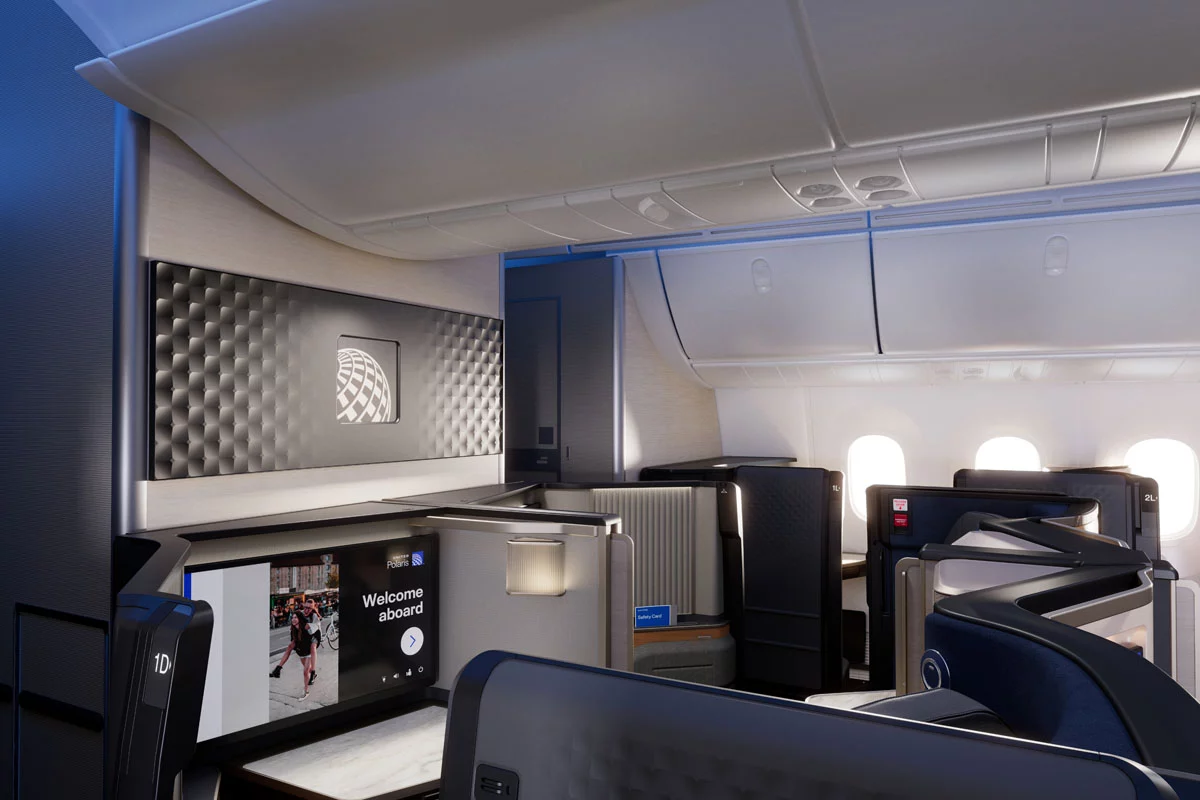
Does ‘Business Light’ offer a real saving?
United is far from first to introduce unbundled business fares. Basic business class fares have been launched by airlines including Air France, Finnair, KLM and Qatar Airways whilst Delta is expected to unbundle its fares later this year.
I ran the maths on a United business class ticket above. Heading to Europe, a quick look at a sample Finnair flight showed the cost difference between a Business Light and Business Classic ticket at £108 each way, or £216 return.
For that, you get:
- Lounge access
- 2x 32kg checked bags
- Priority security, check-in and boarding
…. plus the ability to make changes to the ticket (Business Light is non-refundable and non-changeable.)
The difference in Finnair premium economy is more stark, with Classic costing £52 more per flight (£104 return) in exchange for two checked bags.
It is similar at Air France, with Business Light fares generally just under £100 cheaper per flight than their Business Classic counterparts. Premium economy is reduced by around £60.
Neither restricts the number of tier points earned from these fares, although the number of Avios awarded did vary marginally on Finnair.
Air France still allows elite members to enjoy SkyPriority benefits. Its tickets are also changeable, albeit for a €500 rather than €300 fee.
In reality, the Business Light saving really comes down to whether you have airline status or not. Someone who has lounge access, luggage allowance and priority services from their status might be more inclined to trade down than someone who doesn’t get these benefits for ‘free’.
That said, at least in Basic Economy, airlines have been stripping away the benefits that elite members receive. Even British Airways does not allow elite members on Hand Baggage Only fares to have the ‘one extra free checked suitcase’ benefit that applies to other cabins.
United Airlines is taking Air France’s lead, including one checked bag in ‘Base’ business class but withholding other benefits such as seat selection and Polaris lounge access. You will, however, be able to use lower-tier United Club lounges.
It remains to be seen whether the fare difference United is offering is enough to make a difference to sales, especially as I suspect few business class passengers (unlike economy) use price as the sole driver of their decision.